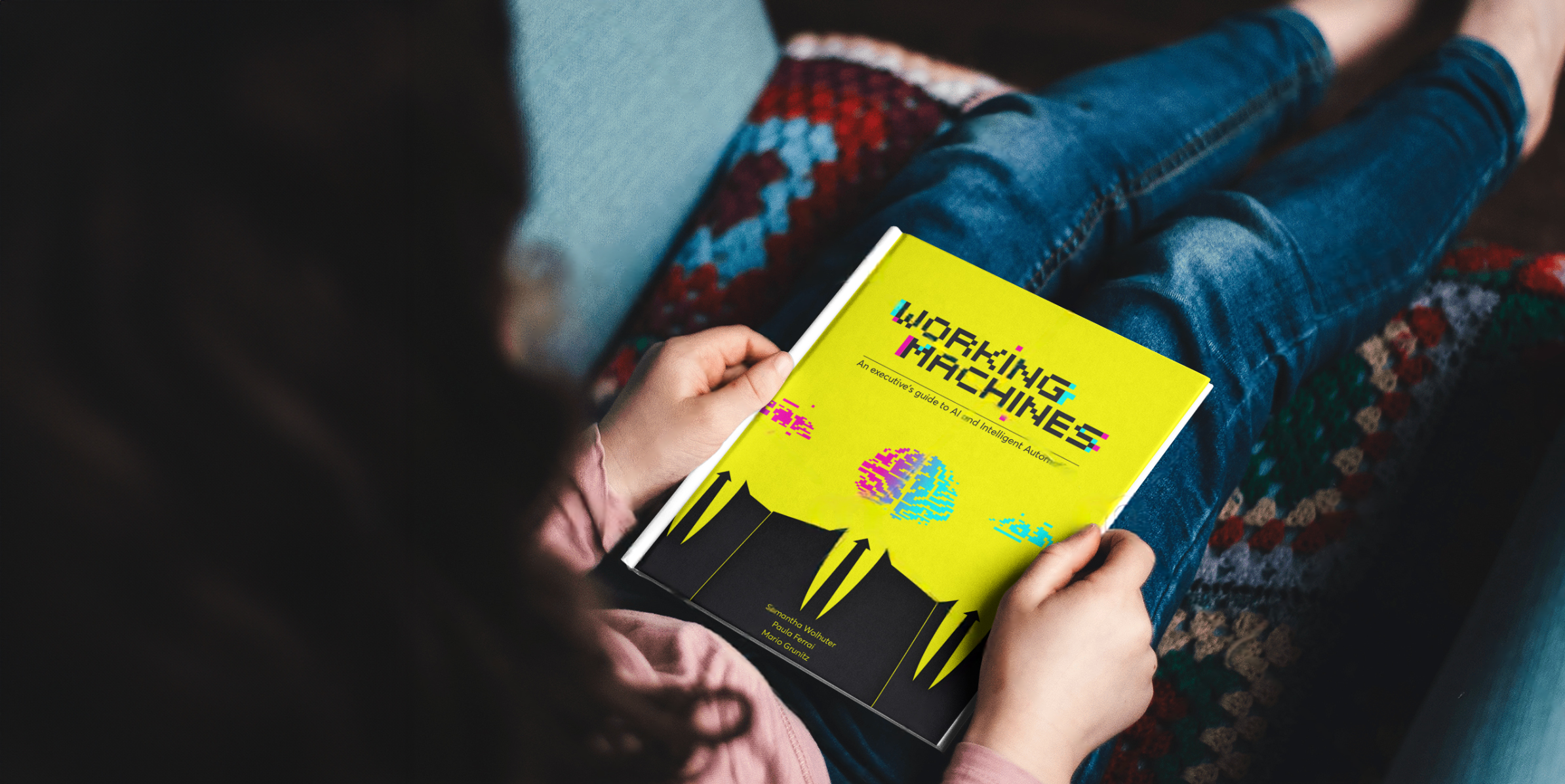
In 2021, Samantha Wolhuter and I published Working Machines: An Executive’s Guide to AI and Intelligent Automation. It was a field guide, practical and plainspoken, built from four years of project work and over 200 articles. We wrote it for executives and business owners who needed to understand what AI could actually do for their organisations without wading through the hype.
Field guides are only useful until the terrain changes. And the terrain has changed dramatically.
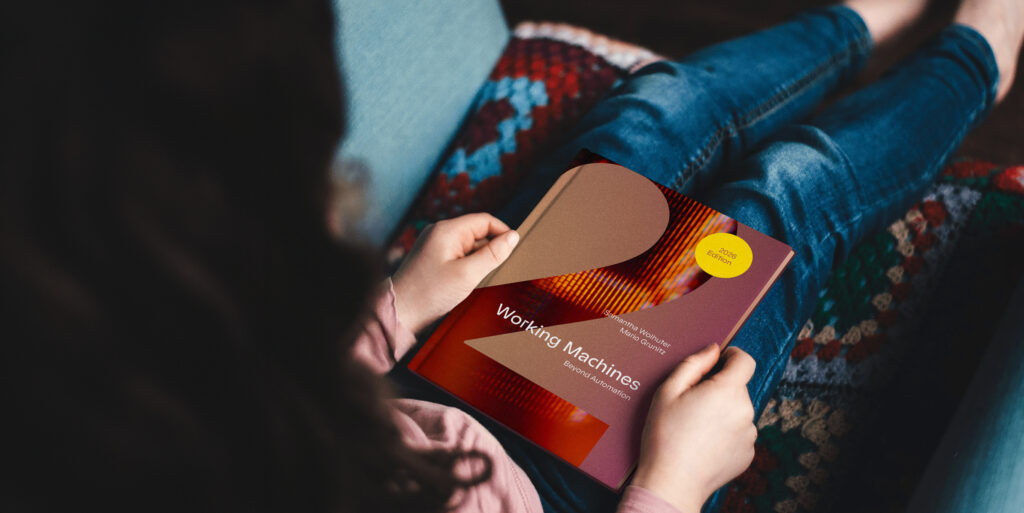
Working Machines: Beyond Automation is our second book on AI, and it’s now available on Amazon. This post covers what the book is, why we wrote it, and why it matters right now.
A progress report, not a sequel
The first Working Machines looked forward. It made a case for what was coming: AI in the boardroom, automation as a workforce partner, data as a leadership issue. Some of those predictions proved accurate. Some didn’t. A few surprised us entirely.
Beyond Automation looks back with hindsight and asks a harder question: what actually happened?
We’ve structured it in three parts. Part one examines what we got right, the predictions that held up and, in some cases, outpaced what we imagined. Part two is the more uncomfortable read: what we got wrong, where we were optimistic beyond the evidence, and what we missed about the human cost of the AI transition. Part three looks at what’s still ahead, including territory we didn’t have language for in 2021.
Think of it as a progress report on the age of AI, one that’s willing to score itself honestly.
How AI shaped the writing process
We used multiple AI platforms as research and reasoning partners throughout, deliberately. If you’re writing about AI risks, you shouldn’t rely on a single AI system to help you stress-test your arguments. Each platform pushed back differently, caught different inconsistencies, and challenged us in different directions. That tension made the book sharper.
It also raised questions we didn’t expect: about authorship, ownership, and what it means to create something when machines are part of the process. Those questions are woven throughout, because they’re not abstract anymore. They’re already yours to navigate too.
The epilogue flips the script entirely. We asked several AI platforms, including Claude, ChatGPT, Qwen, and DeepSeek, to make their own predictions about the road ahead. Their responses are presented exactly as generated, voice and all. It’s illuminating, occasionally unsettling, and more than a little meta.
A taste of what’s inside
Part 1: What we got right
AI did infiltrate the boardroom, and then some. By 2025, senior leadership teams were routinely using AI for scenario planning, risk modelling, ESG scoring, and real-time crisis response. We predicted the cultural shift. What we underestimated was the speed. “AI literacy” has become a recognised executive skill rather than an edge case, and organisations without it are already falling behind.
Part 2: What we got wrong
We positioned AI as a democratising force in 2021, and we were wrong about the timeline and the barriers. The inequality gap that AI has opened, across access, reskilling, infrastructure, and language, is one of the most significant stories of the last five years. We were also too optimistic about human-in-the-loop as a meaningful safeguard. One chapter interrogates what “human oversight” actually means when systems move faster than people can interrogate them.
Part 3: What’s still to come
The final section covers territory that didn’t have a name in 2021. We write about the Synthetic Age, the era in which the line between real and generated, human and machine, becomes not just blurred but increasingly irrelevant. We explore the hidden cost ledger of AI: the environmental, social, and economic costs that don’t appear on the efficiency dashboard. And we make the case for a shift to what we call “user-in-the-loop,” a design philosophy that puts the system in service of the human rather than the other way around.
Who it’s for
If you’re leading a business, building one, or trying to make sense of how AI is reshaping the decisions around you, this book is for you. No technical background required. You do need to care about where things are heading and want a clear-eyed, honest account of how we got here.
For anyone looking for the best books to learn about AI from a practitioner’s perspective, this is the one we’d point you to. We’ve made mistakes in this space, worked through them with real clients on real projects, and written about what we actually learned.
If you read the first Working Machines, this shows you how the map has changed. Coming to it fresh, it works as a standalone guide to AI for anyone navigating this moment in the transition.
A final note
We didn’t write this book to announce that we had all the answers in 2021. We wrote it because the most useful thing we can offer right now is an honest account of what we got right, what we got wrong, and what the evidence tells us about where things are heading.
The choices being made right now, in boardrooms and product teams and classrooms, are accumulating into the architecture of tomorrow. Working Machines: Beyond Automation is our contribution to making those choices more conscious.